What’s in an Invitation Suite? … and What Pieces Do I Need?

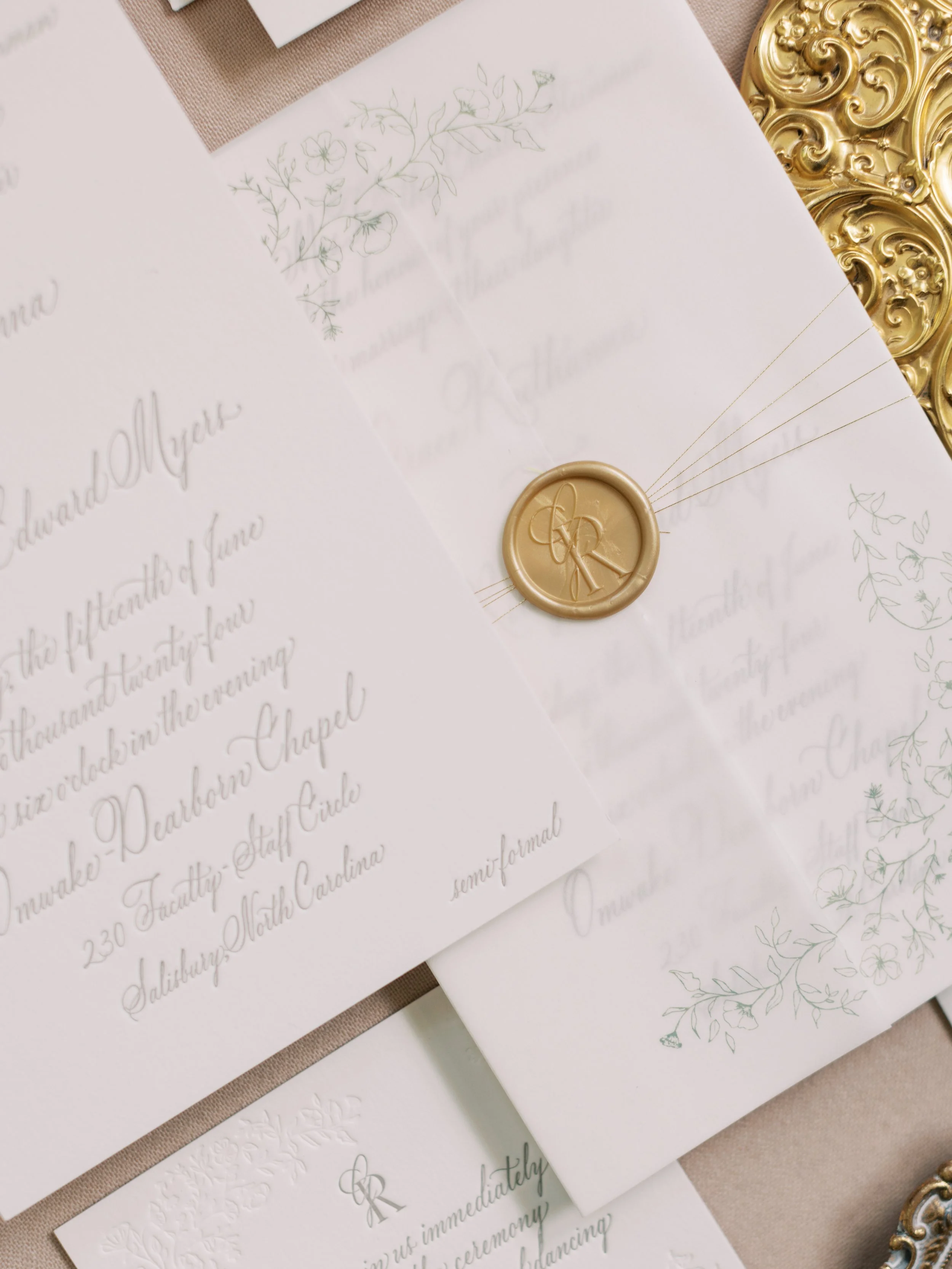
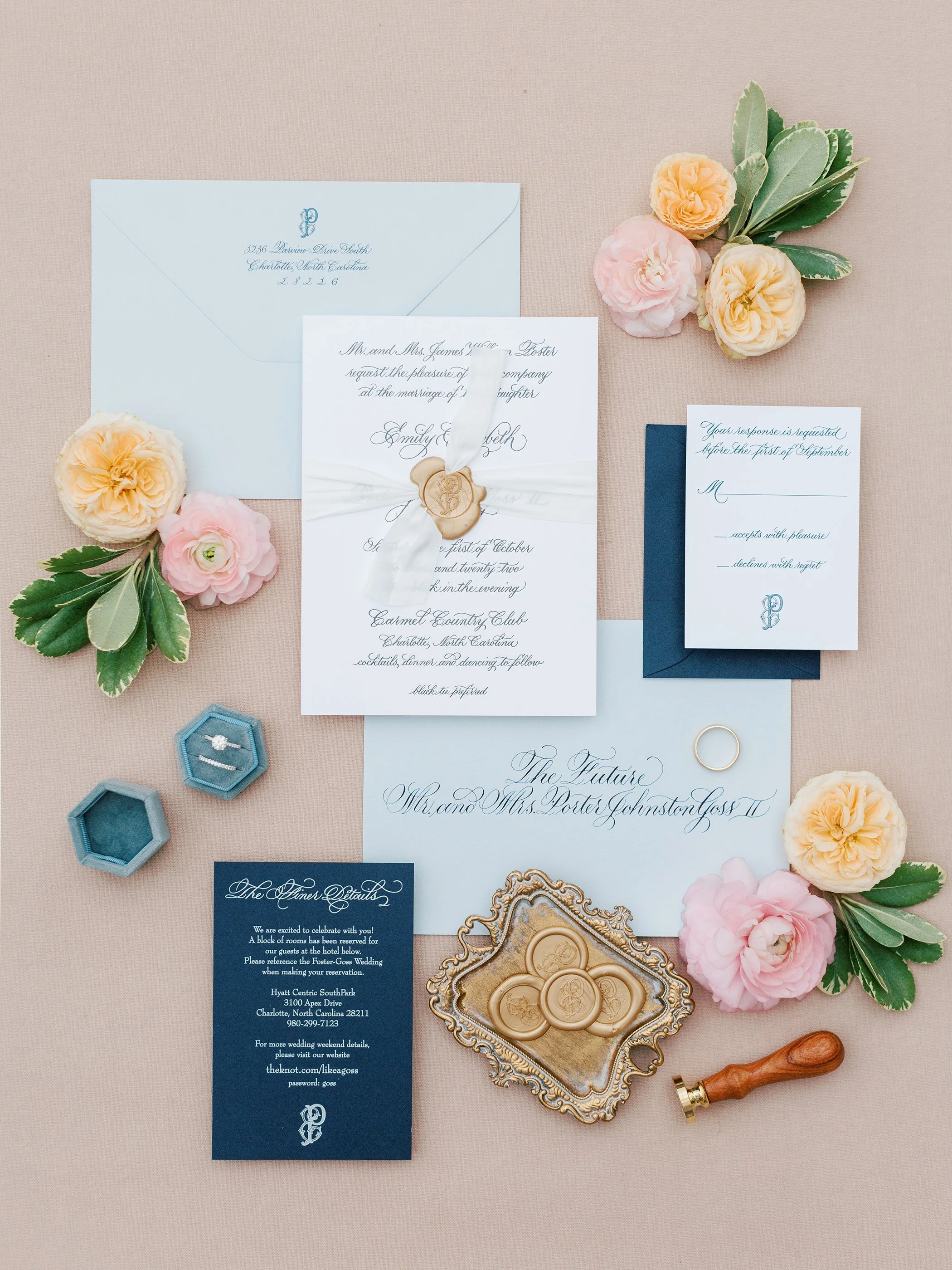
I may be a little partial, but I truly believe your wedding invitation is so much more than paper … it’s the first glimpse your guests receive into the celebration you’ve dreamed of. From the colors and details you select to the style of lettering, every choice begins to tell the story of your day and sets the tone for what’s to come. To give you a sense of how it all comes together, here’s an overview of the pieces that can create a complete suite:
Main Wedding Invitation
Reception Card
Details Card
Response Card
Inner and Outer Envelope
The invitation stands as the heart of your suite. Whether it is formally or casually written, its role is to invite your guests to your celebration and includes important information such as your names, the wedding {or event} date, the location, and sometimes even suggested attire.
If you are having your ceremony and reception in one location, the venue name can go on your main invitation. If you are having the reception in a different location from the ceremony, a Reception Card is traditionally included within your suite. This card is typically scaled down in size compared to your main invitation and includes the reception venue (and perhaps the time, if it is not immediately following your ceremony).
A Details Card offers an elegant way to share essential information: accommodations, transportation details, website, or other pre-wedding events in a seamless way within your invitation suite. Also smaller in size in comparison to the main invitation, this card could also have a different shape (maybe oval?!) or different color card stock from the other suite pieces, so it stands out. While this card is not necessary, it does help in answering common questions that your guests may have so you are not fielding questions.
The Response Card is your guests’ formal reply to the celebration. This card is typically the smallest of pieces in the invitation suite and can be as simple as asking for guests’ names, response (accepts or regrets), and food selection (if applicable for a seated dinner). Each Response Card is accompanied by a pre-addressed and stamped envelope, allowing guests to return their reply directly to the host or wedding planner.
Lastly, all of these items are then placed in an envelope to mail. With more formal mailings, we suggest an inner envelope and outer envelope, while more modern mailings (such as a less-formal Rehearsal Dinner invitation) will simply need an outer envelope.
Some couples choose to tie or hold all of their invitation pieces together with a ribbon, vellum wrap or wax seal. While that is not necessary, it does add to the design and is a nice way to secure all of the pieces of the invitation together. Want to top it off perfectly? We love the pop of an envelope liner! It’s a great way to introduce some color or perhaps a pattern that will tie into the overall wedding day design for a true foreshadowing of things to come!
We’ll dive into the guest addressing soon!